Move the work.
Crossfade moves work from a person to a part, or from one workflow to the next. The move has a defined scope, a watch period and a return path. The person reviews what the part is unsure about.
Discuss your first part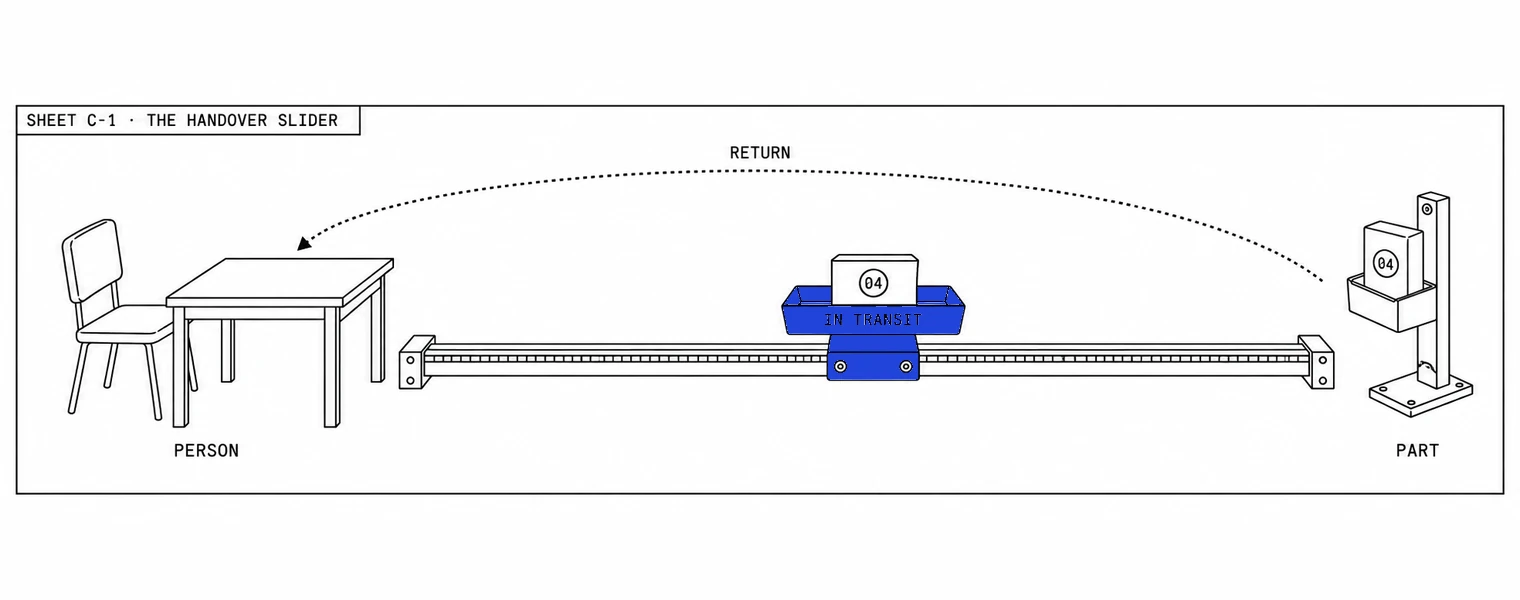
Scope the move.
Every move names four things: the incumbent, the proposed replacement, the affected work and the operating requirements. Where the choice needs evidence first, Switch Check uses Arranger to compare the options and examine failures and interactions.
The move is written first.
Arranger organizes the experiments and the contribution analysis. Crossfade adds the scope and the watch period. The expected result is written before the move and measured in operation against the work it replaced.
Three steps.
- Understand the move
- Bring the number, the current setup, the proposed part and the evidence you have. Define right with the people who own the result.
- Make the move
- Identify the work the part takes on, what must stay compatible, and how work already underway finishes.
- Watch and respond
- Tie each result to the setup that produced it. Keep the part, investigate further, or return by the owner’s rule.
You keep the decisions.
You keep your application, your private data, your quality standards and your release decisions. Boombox is the box the part runs in, and the part stays callable by the people and agents you allow. The return path states what can be restored.
Try parts in and out with ArrangerWhich workflow
should move first?
Bring one workflow. Konstant proposes the part that takes it on. The engagement defines what runs, who owns it, how to judge the effect and how to return.
Discuss your first part