Konstant
Aim the work.
Konstant finds the work in your company context, including work nobody asks for. It connects what customers say, what people know and the number you want to move.
Company intelligenceYou own the number.
Choose what moves it.
Agents are becoming how your customers buy and how your own people work. The software and judgment you already run were built for screens and teams. Konstant takes them out as parts, puts a contract on each and makes them callable, with a defined input, output and revision. Then it aims those parts at what you want: a number to move, a product a customer asked for, a build that used to need a team.

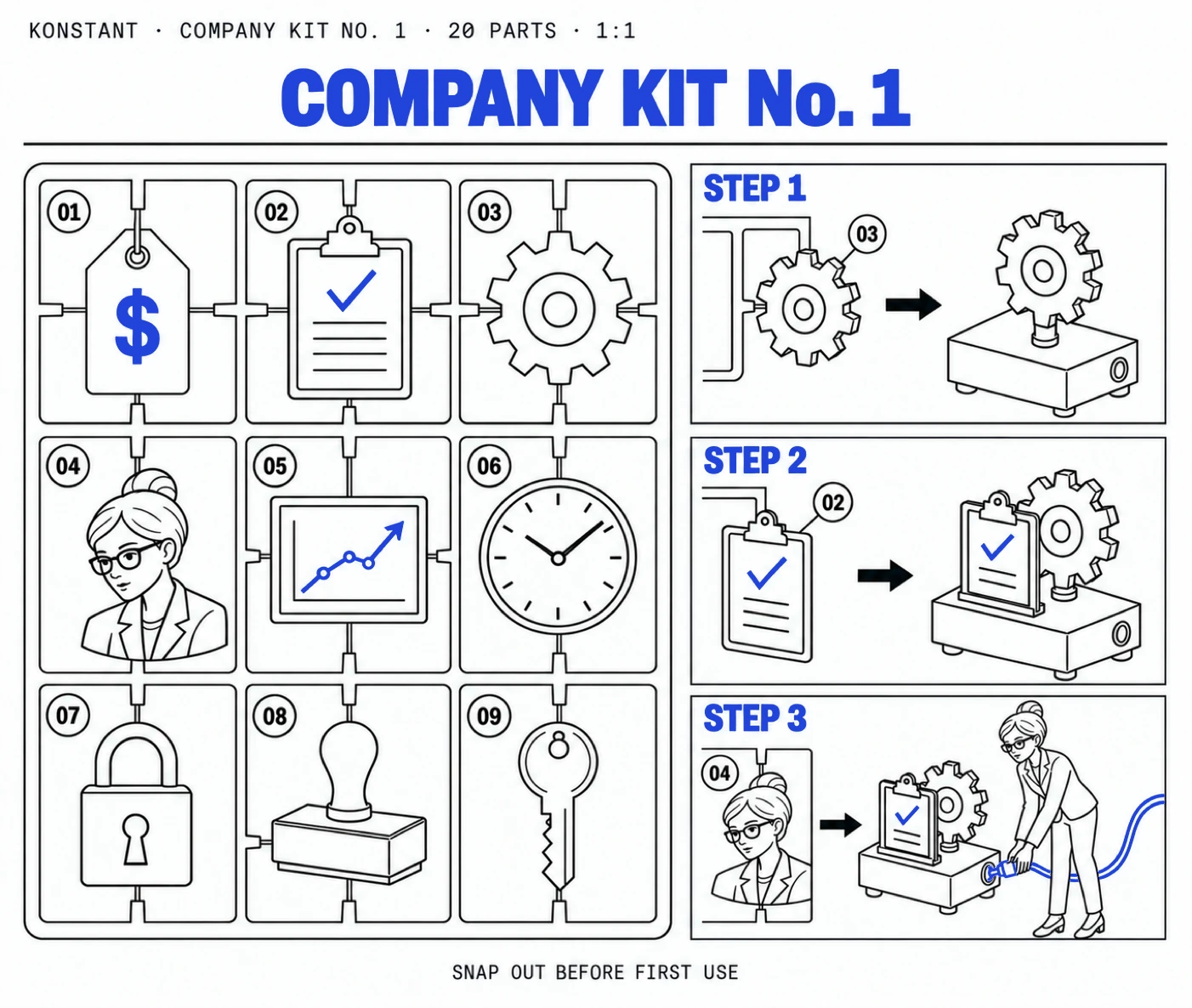
Two problems, one cause. The expertise behind each customer is fused into one product, and none of it has a name.
Every codebase became a team. Saying yes to each customer built a product per customer and a payroll to match.
It is trapped in people and fused into products nobody can reach.
They call the companies that answer in parts. An agent calls a part, not a product: if your pricing, your check or your method has no name and no contract, the agent finds one that does.
Margin, cost per order, cycle time: each moves with a handful of parts. You cannot move a number you cannot name.
What your best people know becomes something another company calls at an exact revision, under your terms, instead of something they rebuild without you.
Nothing migrates and nothing is rewritten. Konstant reads the software and the working methods you already run, proposes the parts, and your team names them. Each part gets a typed contract where it already lives: input, output, the revision that answered. It runs in a box you control, hosted by Konstant or in your own cloud.
The person who owns the number names the parts with the people who know the work. This is a business decision, not work to hand off as tooling. The owner decides what a part means and who may use it.
Where the parts run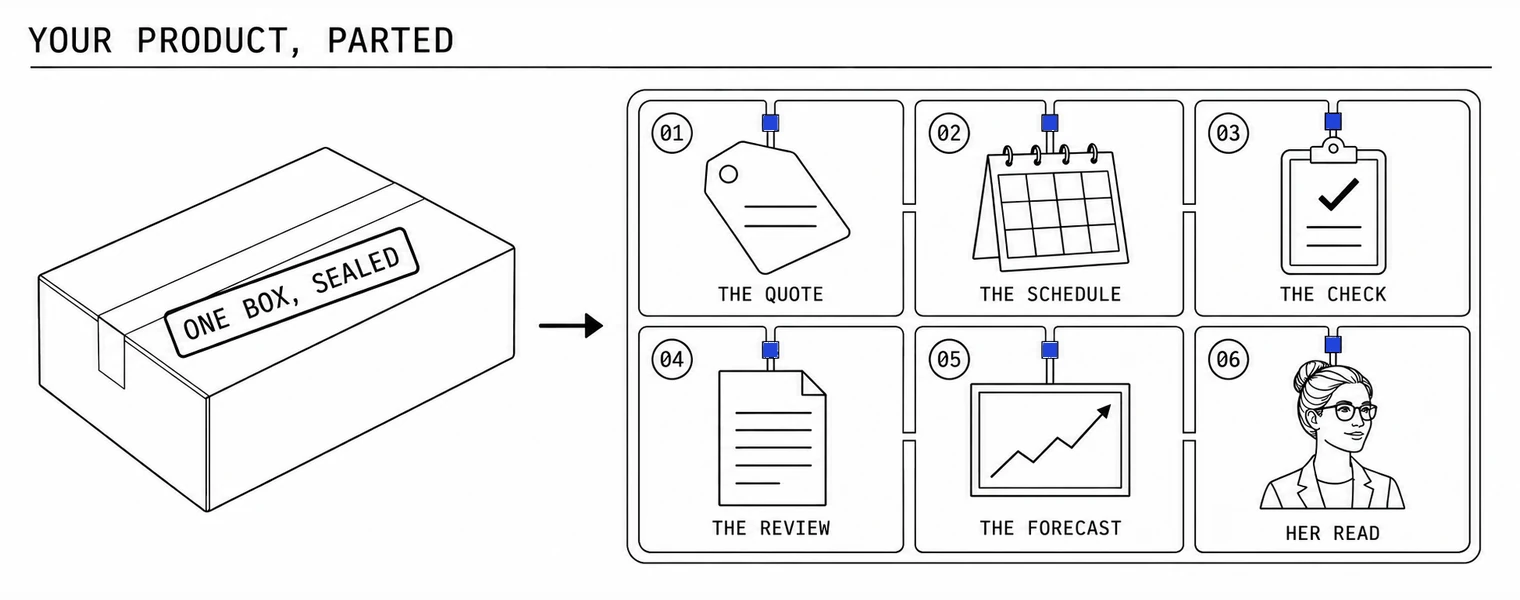
Every company has the person who knows which orders are going to be late before anything in the system says so, and has been flagging them for years. The flag is in the system. The reason is in her head. That is judgment, and it is a part.
Konstant reads the record of what she marked. Arranger proposes the questions she might be weighing, asks them of every order, and keeps the ones that predict what actually happened. The result is her judgment as six questions she can read and correct, named at a revision with her name on it, and scored against outcomes. It stops leaving at five, and an agent that never met her can call it.
How Arranger works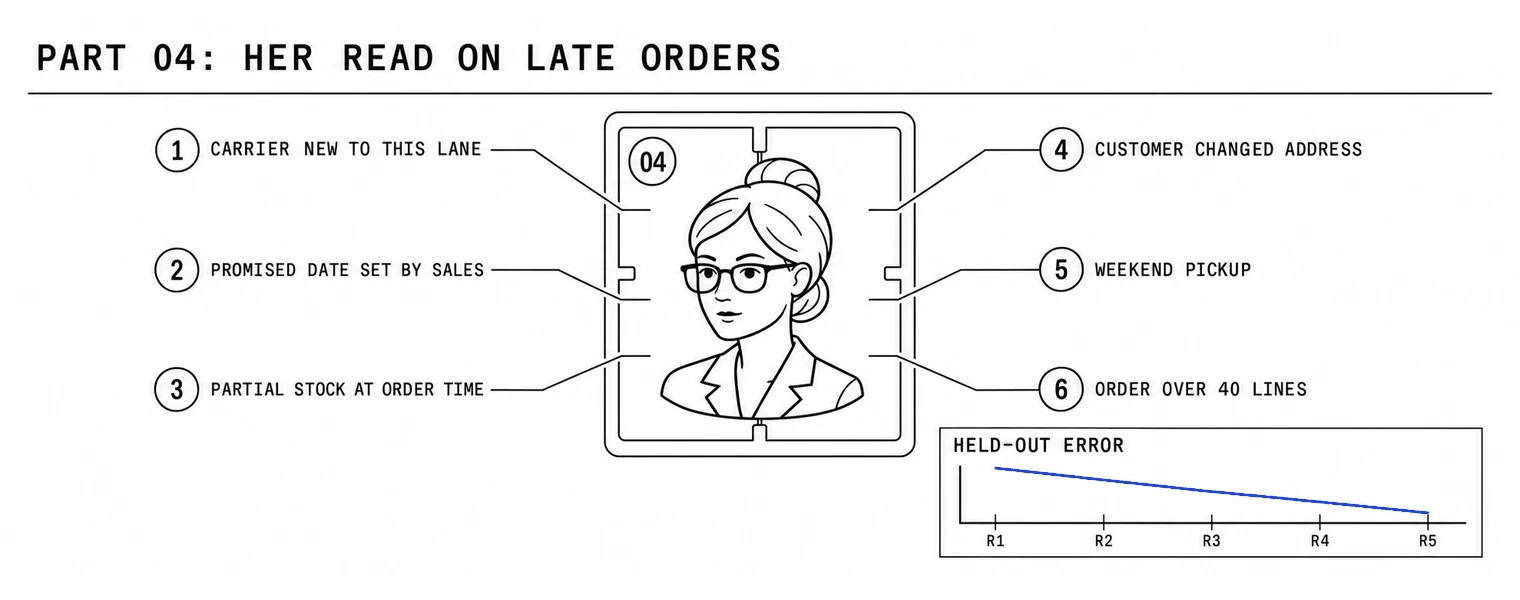
Every customer wants something specific, so a company ends up with a codebase per customer, each a monolith nobody wants to touch. Once the parts are named, a new customer need is a new workflow composed from existing parts plus at most one new part. Your agents and the customer’s agents compose the product for the outcome.
Sit down with Konstant with your revenue, your roadmap and what customers have been asking for, and design the next product toward the number you want. One-to-one builds, without growing the team.
Build the next product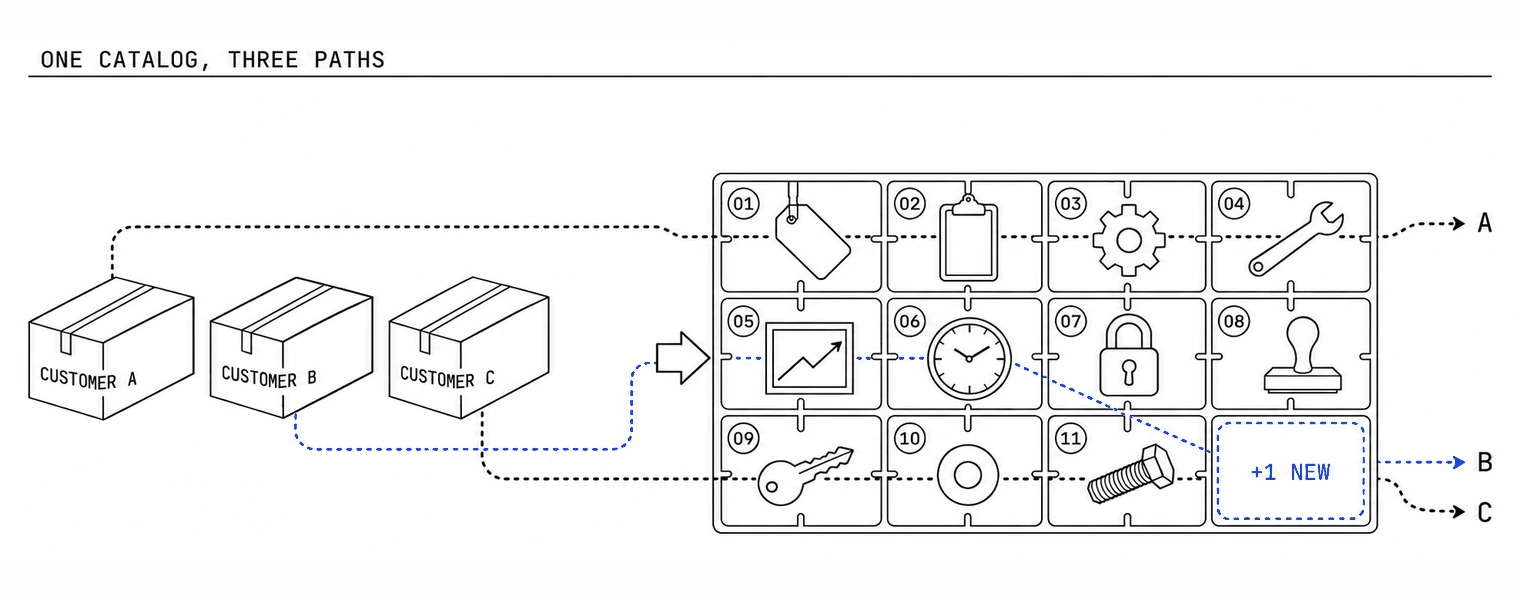
Products are designed to have outcomes for the people who use them. AI labs can repeat tests at low cost. In a business loop, every move takes operating time and puts live work at risk. Arranger brings that test-and-measure discipline to the fewest moves to a confident answer, with a person judging each step.
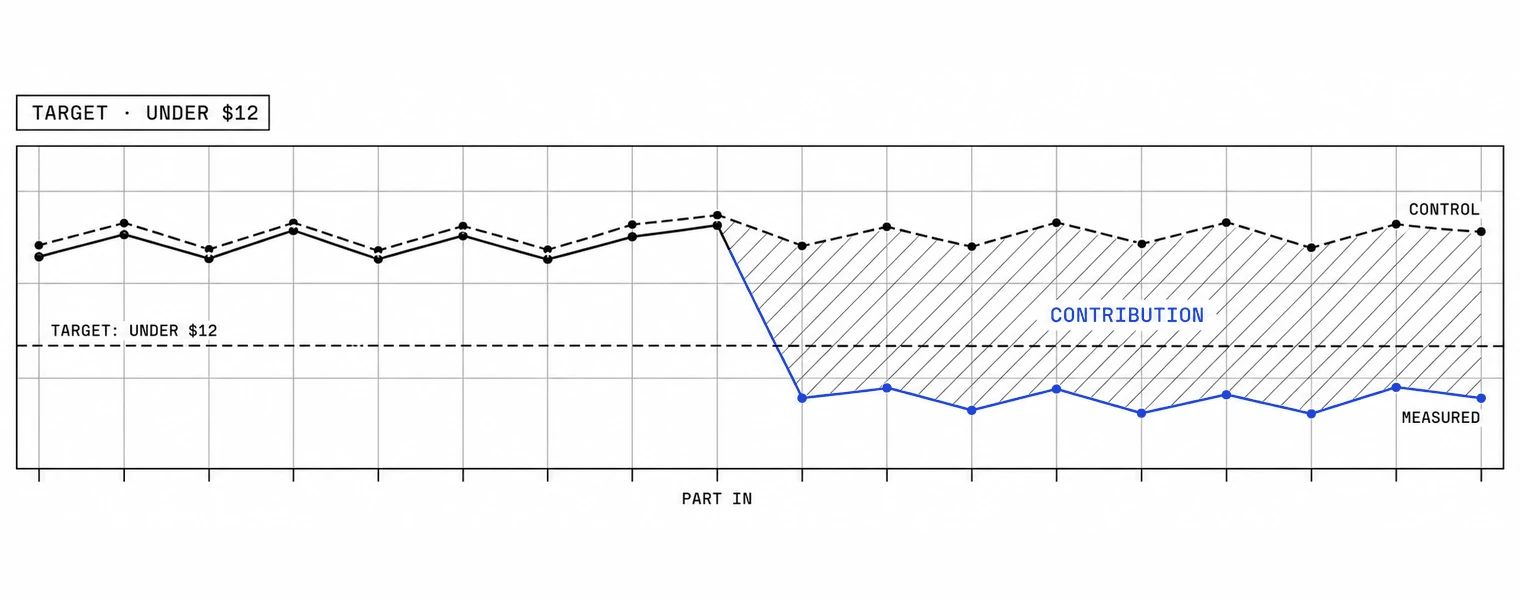
Each workflow here is built toward one number: cost per order under twelve dollars, margin up two points, fewer tickets touched by hand. Arranger tries parts in and out of the live work and measures whether each move brought the number closer. The expected result is written before the move; the measured result lands after it; a miss rolls back by your rule.
You always know which room you are in: the measured line beside the control, every move marked where a part went in or came out, and the gap that stayed open. When results land, the record moves forward and the next move is chosen from it. Precise’s mathematics measures what each part contributed.
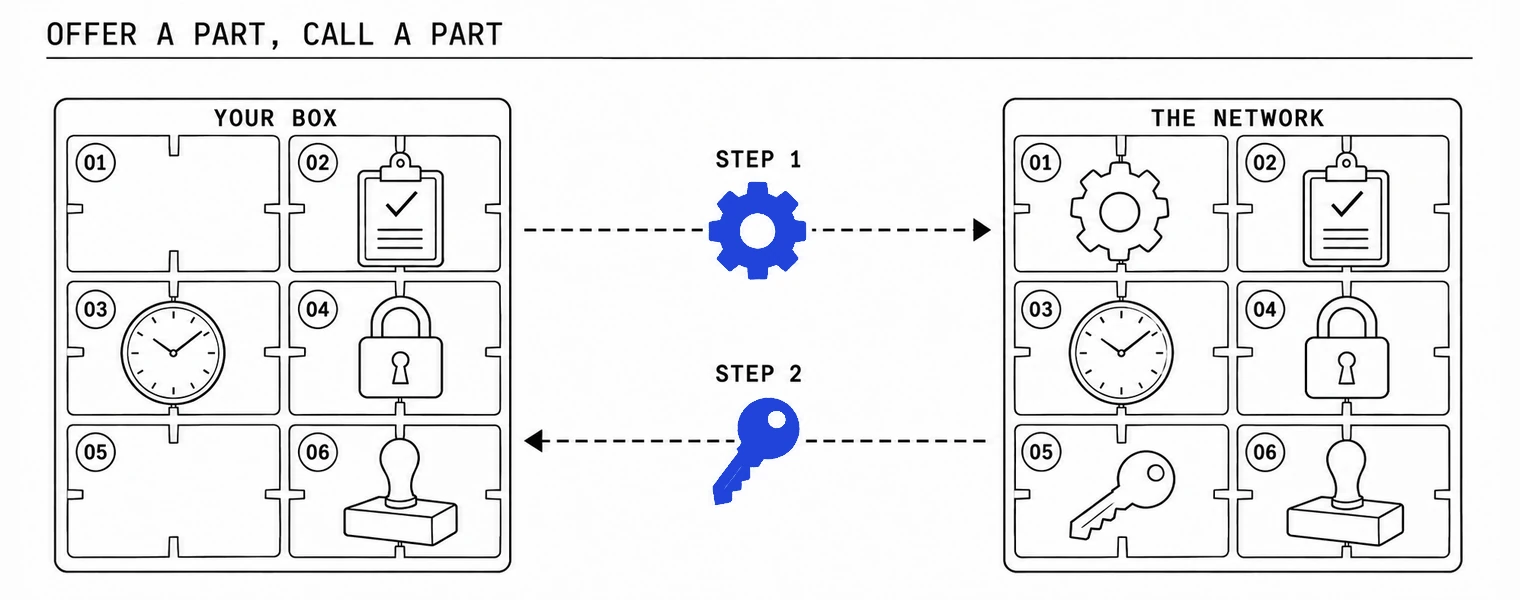
A named part works inside your own workflows first. The owner decides whether it leaves the private catalog: who may learn it exists, who has agreed to what, who may call the exact revision, and what was delivered. The network carries it, and other companies pay you when their agents call your part.
Four products, one box. Start with company intelligence or bring existing software to Boombox.
Konstant finds the work in your company context, including work nobody asks for. It connects what customers say, what people know and the number you want to move.
Company intelligenceArranger tries parts in and out for the fewest moves to a confident answer. A person judges each step; each result shows what the parts contribute.
Measurement toward the numberCrossfade moves the work with a way back. It connects each change to what happens in use, so people can keep it or return.
Operating changeBoombox is the box the parts run in. Each part runs behind a typed contract, hosted by Konstant or in your own cloud.
Bring your codeTwo companies, two roles. One was read as parts and given moves toward its number. The other made a part that Konstant now calls.
Blockdaemon Leadership and board working document · September 2026
Every institutional customer wanted something specific, and the company had the codebases to show for it. Leadership brought Konstant a revenue target and the record: the CRM warehouse, six months of pipeline, contracts, delivery notes and the conversations behind them. Konstant named the parts of the sales machine that were leaking and found the judgment already working in pockets of the same company: fifteen people practicing rules nobody had written down. The plan named those rules as the company’s, and wrote the moves: repair the sales machine, price bespoke work as a product, expose capabilities to customers’ agents, reprice the installed base.
Every move is written before it starts and measured against a control group, so a move gets credit only for what it changed. Each week’s capacity goes to the moves that brought the number closer.
The company’s figures, accounts and people stay with the company.
Precise A part another company made
Precise develops mathematics for measuring what each part of a result contributed and which move is worth trying next. It runs its own research workloads through Boombox, in its own cloud. Our agents took that part and called it inside Arranger, beside Konstant’s own methods for finding overlooked evidence. Precise never designed it for that.
The combination is how Konstant measures every move. Precise keeps its mathematics, its product and its customers. Konstant customers get a maintained part at scale without building it.
That is the network in one relationship: one company’s part doing consequential work inside another company’s product.
Install the kit and point it at a repository. Your agent interviews you about the outcome, reads the code, the tests and the documentation, and returns a map of the parts it found: the question each answers, who would call it, how you would know it was right, and a place for what you would build with it first. Then it stands up one part behind a typed contract and runs it on your machine with its first test. Nothing leaves the repository until you connect.
brew install KonstantCloud/tap/boombox
boombox project init . --client claude --client codex
Then, in your coding agent:
Map the parts of this repository and stand up the first one.How the parts map works
Bring the number that will not move.
Saying yes means Konstant proposes the first part from what you already run, your people confirm it, and it runs in a box you control, hosted by Konstant or in your own cloud. It proves itself against an expected result written before it starts.
If your company has no installed base and no number to aim at, this is not for you yet.
Discuss your first part