Name the parts.
Aim them at a number.
Konstant reads the software and methods you already run. Agents propose the parts. Your people name them. Each part gets a typed contract where it already lives, then goes to work on one number you set.
Discuss your first partGet your parts mapRead what you
already run.
Name the parts.
Konstant reads your code, your tests and the working methods your people follow. It proposes the parts: the quote, the schedule, the check, the review. Some parts are code. Some are methods. Some are one person’s judgment.
Name the parts.
Read the software, the working methods and what people mark. Propose a name for each useful part. The people who know the work confirm what it means, what goes in and what comes out.
Agents propose. People name. The owner decides what a part means and who may use it. A named part carries a typed contract: input, output, and the revision that answered. The contract is what makes the part callable by a person, an agent or another company.
Judgment is a part.
Every company has someone who knows which orders will be late before the system says so. Her read on late orders becomes a part with her name on it, six questions she can read and correct.
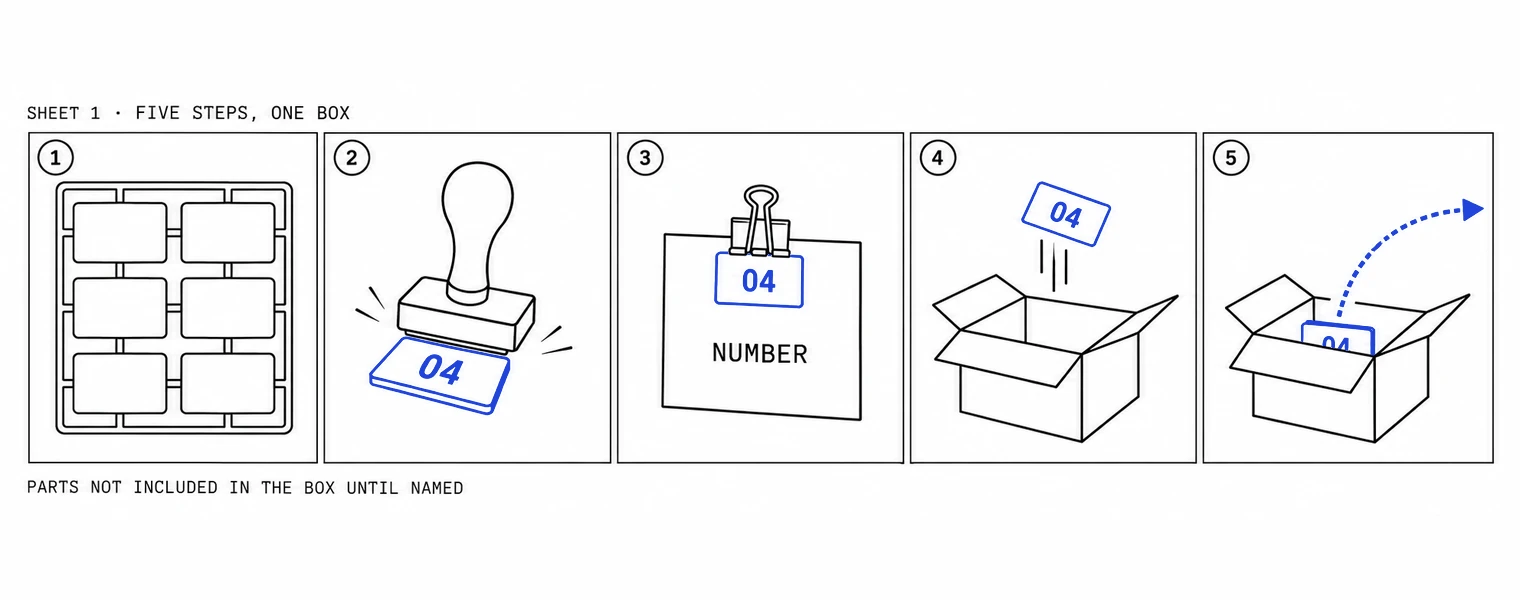
What goes
in the box.
A company might name parts like these. This is an example list, not a customer result.
- 01Pricingthe quote for this order.
- 02Order routingwhere the order goes next.
- 03Her read on late orderswhich orders need attention today.
- 04Delivery schedulingthe next workable delivery time.
- 05Credit checkwhether this customer can order on account.
- 06Stock checkwhat is available for this order.
- 07The renewal emailthe message for this account at renewal.
- 08Exception reviewwhat a person needs to check before work continues.
- 09Margin checkwhat remains after the costs of this order.
One company.
A leader has a number to move. The company cannot move it, and the board is watching.
A company had a number to move, but could not move it. The board was watching. Its record showed fifteen people practicing rules that no document listed. The parts got named. The moves got written.
Aim them at
one number.
Move the work.
Every workflow is built toward one number: cost per order under twelve dollars, margin up two points, fewer tickets touched by hand. Konstant holds your revenue, your roadmap and what customers have asked for. Sit down with it to choose the part, the number and the next product.
Try parts in and out.
Arranger adds and removes parts in the live work and measures whether each move brought the number closer. The expected result is written before the move. The measured result lands after it. A miss rolls back by your rule. Precise’s mathematics measures what each part contributed.
Move the work.
Crossfade moves work from a person to a part, or from one workflow to the next, with a scoped transition and a return path. The person reviews what the part is unsure about.
Run it in a box you control.
Boombox is the box the parts run in. It is a private VM hosted by Konstant, or it runs in your own cloud. The terms travel with the part.
Aim the work Try parts in and out Move the work Where the parts runThen the
network.
A named part works inside your own workflows first. The owner decides whether it leaves the private catalog. If it does, another company’s agent can use the exact revision under your terms, and the part gets paid.
One case, read as parts.
At Blockdaemon, every institutional customer wanted something specific, and the company had the codebases to show for it. Leadership brought Konstant a revenue target and the record. Konstant named the parts of the sales machine that were leaking and found judgment already working in pockets of the company: fifteen people practicing rules nobody had written down. Every move was written before it started and measured against a control group.
Read the thesisA first
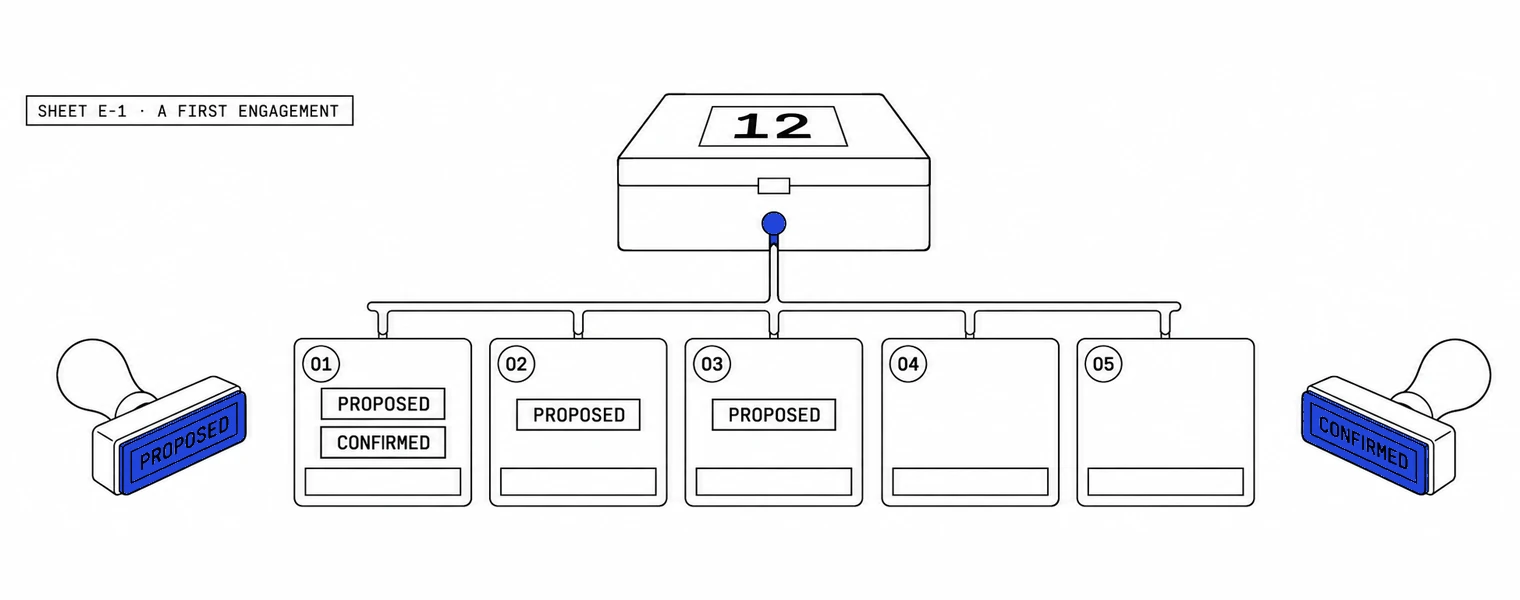
engagement.
- Bring
- The number that will not move and the people who feel it. Naming the part is the work, not the prerequisite.
- Work together
- Konstant proposes the parts from what is already there. Your people confirm them. Hands-on building and integration are part of the scope where needed.
- Leave with
- A named part with a typed contract, running in a box you control, with an expected result written before it starts.
- Commercial scope
- Agree product access, deployment, ongoing operation and improvement, and any specialist use.
Start with
one part.
Bring the number that will not move. We name the first part with you. If your company has no installed base and no number to aim at, this is not for you yet.
Discuss your first part