Move one
operating number.
Cost per order. Margin. Cycle time. Each moves with a handful of parts. Konstant finds them, your people name them, and every move is measured against a control.
Discuss your first partStart where
it hurts.
A costly exception, a slow handoff, a constrained line. Pick one. Konstant reads the code, the methods and the record behind it and proposes the parts.
The part that is a person.
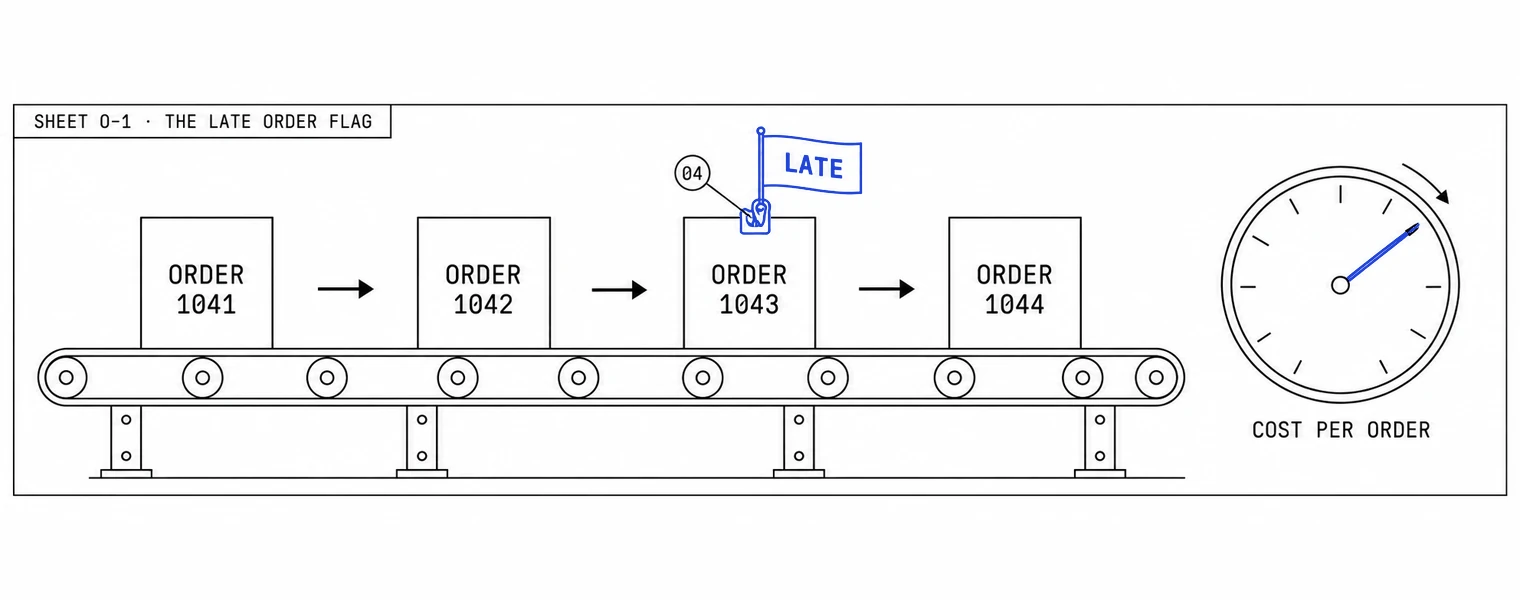
Every company has the person who knows which orders will be late before anything in the system says so. The flag is in the system. The reason is in her head. Konstant reads the record of what she marked. Arranger turns it into six questions she can read and correct, named at a revision with her name on it. It stops leaving at five, and an agent that never met her can call it.
Try parts in and out.
Move the work.
Arranger tries parts in and out of the live work and measures whether each move brought the number closer. Judge the whole line against the operating objective. A faster step counts when it helps the customer or the business result. Include quality and exceptions.
Move the work.
Crossfade moves the work from a person to a part, or from one workflow to the next, with a scoped transition and a return path. The person reviews what the part is unsure about. The operating owner and domain experts stay responsible for how the work is used and judged.
Tie the move to the economics.
Finance connects observed changes to business value. Released hours create capacity. Realized savings, or profitable use of that capacity, need their own evidence. Keep the corrected assumptions and the results for the next move.
Develop a new customer offerWhich number do
you want to move?
Bring the number and one accountable operating owner.
Discuss your first part